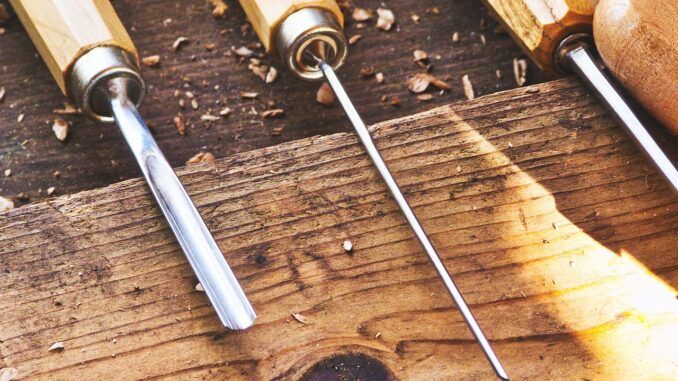
Chisels come in a dazzling array of styles, each designed for a specific task. Bench chisels, paring chisels, and mortise chisels are staples in any carpenter’s toolbox. Bench chisels are versatile and can handle general tasks like chopping out joints. Paring chisels, on the other hand, are longer and thinner, perfect for more delicate and precise work. When something sturdy is required for thicker materials, mortise chisels are the go-to, thanks to their robust build.
>>>Shop for Chisels<<<
Different shapes serve different purposes too. Bevel-edged chisels are great for getting into tight spots due to their beveled sides. Firmer chisels, with their solid rectangular cross-sections, are built for heavier work. Then there’s the compact butt chisel, which is short but mighty. It’s perfect for tasks in tight spaces where a full-length chisel might be too unwieldy.
Now, let’s talk about quality. A fine chisel not only gets the job done but lasts the test of time. Look for high-carbon steel blades—they maintain sharpness and resist wear. Craftsmanship matters. Units from reputable brands tend to have that keen edge and balance between blade and handle that feels just right in your hand.
Handles, although often overlooked, play a critical role. Wooden handles offer a traditional feel and can absorb more shock. They’re great for those who appreciate a classic touch. Plastic handles, though, bring durability and handle environmental changes better, like humidity or temperature swings. Choosing between the two often comes down to personal preference, as both have their place in a well-rounded toolkit.
Selecting Chisels for Specific Woodworking Projects
Picking the right chisel for your project can drastically improve your craftsmanship. First up is the type of wood you’re working with. Softwoods like pine require different tools than a hard oak. Softer woods are more forgiving, while harder ones demand something robust and sharp to penetrate cleanly without splintering.
The intricacy of your design can sway which chisel to grab too. For detailed carvings or fine joinery work, chisels with fine, sharp edges—like paring chisels—are ideal. For broader, less detailed tasks, bench chisels with wider blades do the trick nicely.
Size really does matter when it comes to chisels. Smaller chisels allow for precision work, great for detailed designs, while larger ones take on more material at once, perfect for shaping or roughing out wood.
Each chisel task has its own requirements, from smoothing surfaces and trimming edges to fitting joints perfectly. It’s not just about making things fit but ensuring they do so beautifully. Keep task relevance in mind, and you’ll always choose right.
Maintaining Cutting Precision: Care and Sharpening Techniques
Keeping your chisels sharp is like giving your car a tune-up. Regular sharpening not only prolongs the life of your tools but also makes your work easier, delivering cleaner cuts and less strain on your arms.
Sharpening methods vary, but using sharpening stones is a classic approach. Oil or water stones are the most common, requiring some practice to master. While stones are traditional, sharpening systems offer convenience, providing guides and attachments to help get the right angle with more ease.
Speaking of angles, honing is where the magic happens. Maintaining the correct angle ensures your chisel slices rather than tears through wood. Each chisel type may need a different angle, tailored to the task at hand. Investing time in learning this skill pays off in precision work.
Regular care doesn’t stop at sharpening. Keep chisels clean and dry to prevent rust. A light coat of oil can protect metal parts, and storing them in a tool roll helps avoid edge damage. Consistent maintenance keeps your chisels ready for any task, saving you time and hassle later on.
Safety First: Ensuring Safety and Efficiency in Using Chisels
Chisels can be dangerous if not used with care. Unguarded, they can slip and cause serious injuries. Being mindful of your workspace and maintaining focus reduces risks.
Wearing the right gear is essential. Protect your hands with sturdy gloves and keep your eyes safe with goggles. A clutter-free workspace means fewer chances of accidents.
Improper usage can lead to chisel kickback. To avoid this, always cut away from your body and apply controlled, steady pressure when carving. This maximizes control, providing consistency in your chisel work.
Keep an eye on the condition of your chisels. Dull blades or worn handles increase the risk of accidents. If you notice excessive wear, it might be time to replace or refurbish those tools. Chisels in good shape mean safer, more effective woodworking.
Leave a Reply