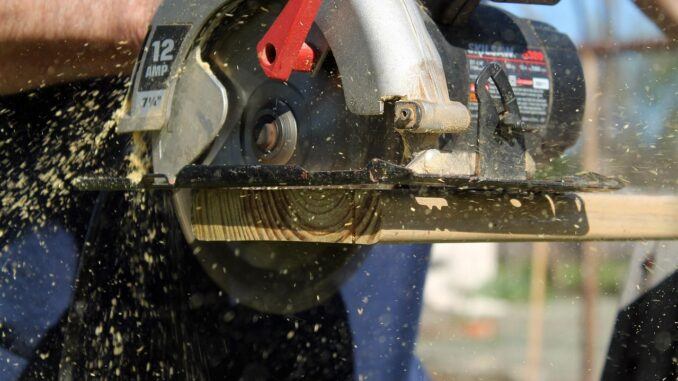
Starting on a woodworking journey without a trusty power saw? Feels like you’re missing a key piece. These powerful tools are all about making clean, precise cuts, saving you from the manual labor blues. But before you grab one and start sawing away, let’s break down the basics.
Advantages of Ebay Workshop Tools
There are several types of power saws, each with its own quirks and perks. Circular saws are your go-to for straight cuts, while miter saws pull off angled cuts like a champ. Table saws? Think bigger cuts with precision. Then there are jigsaws that handle curves and odd shapes with finesse. Learning what each one does is step one in leveling up your woodworking game.
Getting comfy with power saws opens up a world of potential projects. You’ll start with small stuff like birdhouses, but with practice, you’ll be crafting bookshelves and even furniture. It’s less about the tool itself and more about what you can create once you’ve got it in your toolkit!
Navigating Essential Features and Safety
When you’re new to woodworking, knowing what to look for in a power saw can make all the difference. First up, think about features that enhance usability. Look for adjustable blade angles and easy depth adjustment, especially on a circular saw. You want a tool that feels intuitive, not one that has you flipping through the manual every five minutes.
Safety features are a biggie. A solid lock mechanism is essential to avoid any accidental starts. Look for models with guards that provide finger safety, and make sure there’s a solid grip handle. These features together ensure not only a better cut but also peace of mind.
Balancing functionality with simplicity is key. You want something that offers enough features to grow with you, but not so complex that you’re overwhelmed. Starting with a model that’s easy to handle means you’ll spend more time mastering cuts rather than fiddling with knobs.
Safety isn’t just about the saw itself; it’s about how you use it. Gear up with safety glasses, and never overlook the importance of using clamps to hold your wood steady. Combining the right tool with the right habits primes you for success, keeping your projects fun and injury-free.
Top 5 Power Saws Recommended for Beginners
Finding the right power saw can feel overwhelming with so many options, but narrowing it down to a top five can ease that stress. Let’s check out five beginner-friendly saws loved by newbies and seasoned woodworkers alike.
First on the list is a circular saw, often touted as the MVP of the power tool world. Models like the Dewalt DWE575SB are lightweight yet packed with power, making straight cuts a breeze. It’s loved for its balance and handy electric brake feature, adding a layer of safety.
Then there’s the Bosch GCM12SD miter saw. It’s perfect for those looking to explore angled cuts. This beast is known for its smooth gliding action and easy-to-read bevel scale, taking the guesswork out of angled projects.
If table saws are more your style, consider the SKIL 3410-02. It’s equipped with a sturdy stand, making it easy for a beginner to use without sacrificing precision on larger pieces. Plus, the folding stand means it’s not going to hog your entire workspace.
Jigsaws like the BLACK+DECKER BDEJS600C are ideal for anyone wanting to dive into creative projects. Its adjustable speed lets you cut through various materials smoothly. This one’s a favorite for its ability to tackle curves and detailed designs.
Last but not least is the Makita XSS02Z, a cordless circular saw offering versatility and freedom from power cords. It’s compact and has a great run time, so you’re not constantly hunting for outlets mid-project.
Choosing any of these saws gives you a safe entry point with an array of functionalities catering to diverse beginner needs. Each has its pros and cons, but with expert reviews and user feedback, you can zero in on what’s suited for your projects.
Selecting the Right Saw for Your Woodworking Projects
Matching your saw to your woodworking projects can change your whole experience. If you’re focusing on crafting small items, a jigsaw or compact circular saw might be your go-to. For larger furniture, a table saw delivers the muscle you need.
Think about durability and maintenance. Cordless models offer flexibility, but they come with batteries to manage, which could mean more upkeep. Corded options might limit movement but can offer more power consistently.
Performance ties back into how the saw matches your project needs. A lighter saw can be easier to handle, but may not have the grunt for heavy-duty work like cutting thick hardwoods. Consider what fits your usual workload.
When you’re on a budget, value is everything. Sometimes it’s better to go for mid-range models that offer decent performance and were built to last, rather than the priciest or cheapest. Investing wisely means you won’t need to replace your saw every few projects.
These considerations will help you weigh functionality against cost, longevity, and ease of use. With the right choice, your saw becomes more than a tool—it’s your partner in making beautiful pieces come to life.
Leave a Reply