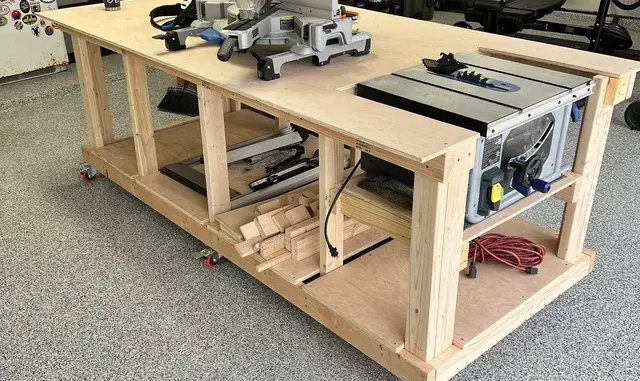
Picture having a workspace that perfectly suits your needs. That’s why a custom workbench is a game-changer. It becomes more than just a surface to work on, blending into your personal style and enhancing the efficiency of whatever craft you’re into.

Whether you’re into woodworking, metalworking, or just need somewhere to tinker with gadgets, there’s a style out there to meet your needs. From simple tables to elaborate craftsman workbenches with built-in cabinetry and storage, you can create something truly unique.
Why go generic when your workbench can be tailored to offer durability for your projects, aesthetic to match your beloved space, and functionality that makes your life easier? Building it yourself guarantees it checks all these boxes, and you get to choose exactly how each part works for you.
Gathering Essential Materials and Tools
Before diving into the construction, let’s talk essentials. What you build with greatly impacts the outcome. Basic materials like wood, nails, screws, and glue are the backbone of any sturdy workbench. They hold everything together, quite literally.
Choosing the right wood is like picking the paint color for your house. Pine is often cheap and easy to work with, while oak or maple offer durability and resilience for heavy-duty projects. Your choice should align with what you need from your bench.
Tools are your best friends in this venture. Saws, drills, clamps, and levels are fundamental. They help shape, secure, and ensure your creation comes together just right. If you don’t have them already, consider renting or borrowing to keep costs down.
Speaking of costs, budget wisely. It’s easy to get carried away with fancy materials and high-end tools. Plan according to your needs and pocket. This helps avoid any mid-project surprises, keeping the process smooth and enjoyable.
Designing Your Workbench: Key Steps and Tips
Crafting a functional workbench starts with a little blueprint action. You want to nail down those dimensions before you even think about cutting anything. Too tall or too short, and you’re in for an uncomfortable time. Aim for a height that suits the primary tasks you’ll be doing.
When it comes to features, think about the ninja tools you want at arm’s length. Maybe a spot for a vise, some drawers for your ever-growing screw collection, or a shelf to stack up your gear. The secret sauce lies in mixing utility with simplicity—keeping it functional without being cluttered.
Visualizing is part of the fun and definitely important. Sketch things out even if it’s on a napkin or with some online design tools. Seeing it helps avoid some head-scratching moments during execution.
Safety doesn’t have to mean boring. It’s more about being practical. Think about rounded edges to keep from those accidental bruises. Stability is key too—your bench shouldn’t budge when you give it a solid nudge.
Building Process: From Assembly to Finishing Touches
Alright, tools are on the ready, and your design’s solid. Time to put it all together. Start with the base—typically the sturdiest part of your workbench. Get those legs right, because nobody wants a wobbly setup.
When joining pieces, you’ve got options. Classic mortise-and-tenon is a craftsman’s dream, but dowels and screws can be less time-consuming without sacrificing strength. Choose what fits your skill level and tools at hand.
Sanding might seem secondary, but it’s crucial. Smooth out your surfaces to avoid splinters and prep for any finishes. Staining and sealing your wood protect it from the wear and tear, while giving a polished look that’s personal and pro.
Do a final round of checks. Make sure that it’s all straight, that the bench doesn’t wobble, and that all features like drawers or shelves work smoothly. This is where adjustments happen, setting those final touches to make it just right.
Leave a Reply