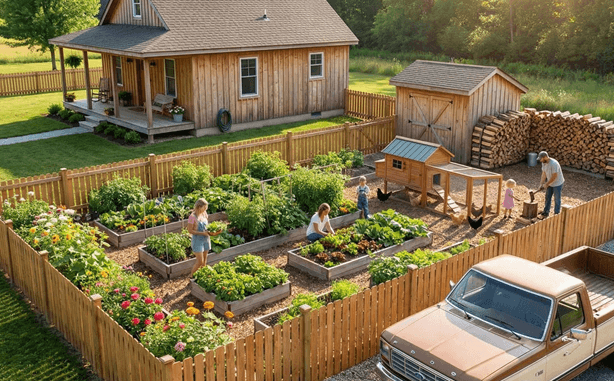
Homesteading is all about going back to the basics and finding joy in self-sufficiency. It’s not just about living in a cabin far from the hustle and bustle or donning a straw hat for that picture-perfect Instagram shot. Homesteading is rooted deeply in history, when people relied heavily on their land and skills to meet their needs. Fast forward to today, folks are rediscovering this lifestyle as a response to fast-paced, consumer-driven living.

100+ DIY Projects For a Self-Sufficient Backyard
Our modern take on homesteading has gained quite the following lately. There’s been a surge in people looking to grow their own veggies, raise chickens, and craft their own clothing. Why the shift? Well, there’s this genuine desire to embrace sustainability, be more independent, and live a life that’s kinder to both wallet and planet.
At its core, homesteading thrives on a few key principles: sustainability, independence, and resourcefulness. It’s about using what you have, reducing waste, and depending less on what you can buy at the store. Plus, there’s immense value in gaining skills that empower you to take charge of your life, from canning your garden harvest to crafting furniture from recycled wood. And let’s face it, knowing you made that delicious brunch out of everything sourced from your own backyard feels pretty fantastic!
Key Elements of a Successful Homestead
Success in homesteading starts with finding the right patch of land. Whether you’re eyeing a rural retreat or a suburban plot, picking a location that suits your needs and lifestyle is vital. Consider your access to water, the quality of the soil, and how much land you might need for things like gardens or livestock.
It helps to have a few hands-on skills in your toolkit. Being handy with basic construction, knowing your way around a garden, or even just having a knack for household repairs can go a long way. These skills not only save you money but also boost your confidence when things need fixing or improving around the homestead.
Once you’ve got the land and the skills, focus on essential homesteading activities. This often means diving headfirst into gardening, tending to your crops like they’re the stars of the show. Whether you’re growing heirloom tomatoes or just a few herbs, there’s tons of satisfaction in cultivating your own food.
>>>eBay Homesteading Books<<<
Animal husbandry might also pique your interest, especially if you want fresh eggs or dairy straight from your backyard. Chickens, goats, and other small livestock are popular choices. Just be ready for the responsibility! Caring for animals ties closely with the rhythms of nature and gives a real sense of connection to your surroundings.
Incorporating renewable energy sources is another cornerstone of modern homesteading. Think solar panels, wind turbines, or a simple rainwater collection system. These not only cut down on bills but also keep your homestead running sustainably. Plus, there’s something pretty empowering about harnessing the sun to keep things ticking over smoothly.
Benefits and Challenges of the Homesteading Lifestyle
Choosing the homesteading path brings a bag full of benefits, most of which seep into every nook of your personal and environmental well-being. Living off the grid often means less reliance on traditional utility systems, which can drastically lower your bills and your carbon footprint. Whether it’s savoring homemade bread fresh from your own oven or enjoying a sunset on your porch, there’s a real sense of satisfaction and peace that comes from creating a life that’s truly your own.
But hey, let’s not romanticize it entirely—homesteading comes with its fair share of challenges too. Legal hurdles can pop up, especially if you’re making significant changes to your land or structures. Zoning laws or regulations about livestock can throw a wrench in your plans if you’re not careful. It’s crucial to get familiar with local laws and possibly consult with a pro before making big decisions.
Financial hurdles are another aspect to consider. It’s easy to underestimate costs when you’re dreaming up your slice of paradise. Initial investments in land, equipment, and perhaps solar panels can add up quickly. Budgeting wisely and prioritizing what’s most important can make all the difference.
Practical challenges can also be daunting, especially for newbies. Weather, pests, and crop failures can be a harsh reality check. It’s these moments that test your mettle and determination. Yet, seasoned homesteaders often share that these trials forge resilience and adaptability, qualities that carry you through.
Listening to stories from those who’ve been there can be gold. Experienced homesteaders have loads of wisdom on what works and what doesn’t, and they’re often eager to share their lessons about mistakes made and victories won. They’re like a living handbook, full of insights that can prevent you from reinventing the wheel or stepping on the same rake twice.
Starting Your Homesteading Journey: Practical Steps to Take
Getting started with homesteading isn’t something to rush. It begins with setting clear goals that align with your values and dreams. Maybe you’re drawn to growing organic produce or living more sustainably, or perhaps you crave independence from the grid. Whatever motivates you, establish a clear vision to guide your path.
Creating a realistic plan is the next step. Break down your big goals into manageable chunks. This might involve sketching out what your homestead might look like in a year’s time versus five years down the line. The road to homesteading can be a marathon, not a sprint, so pacing yourself keeps things achievable.
Financial planning can’t be skipped. Starting costs might include land, seeds, tools, perhaps some livestock, and maybe even renewable energy sources like solar panels. Staying on top of these expenditures with a detailed budget can relieve a lot of stress in the long run. Even a side hustle or more intensive preparation for seasonal products to sell can go a long way in supporting the financial aspect of your homestead.
Building a community can be one of your greatest assets. Connecting with fellow homesteaders, whether through local groups or online forums, provides a wealth of knowledge, support, and friendship. Swapping tips, seeds, or even lending a hand on a neighbor’s project can create bonds that strengthen your journey.
Despite the challenges, remember that every small victory is a step forward. Whether it’s the first harvest or simply learning a new skill, celebrating these wins fuels motivation. And don’t forget to enjoy the ride—homesteading is as much about the journey as it is the destination!
Leave a Reply